NASA Welcomes Türkiye as Newest Artemis Accords Signatory
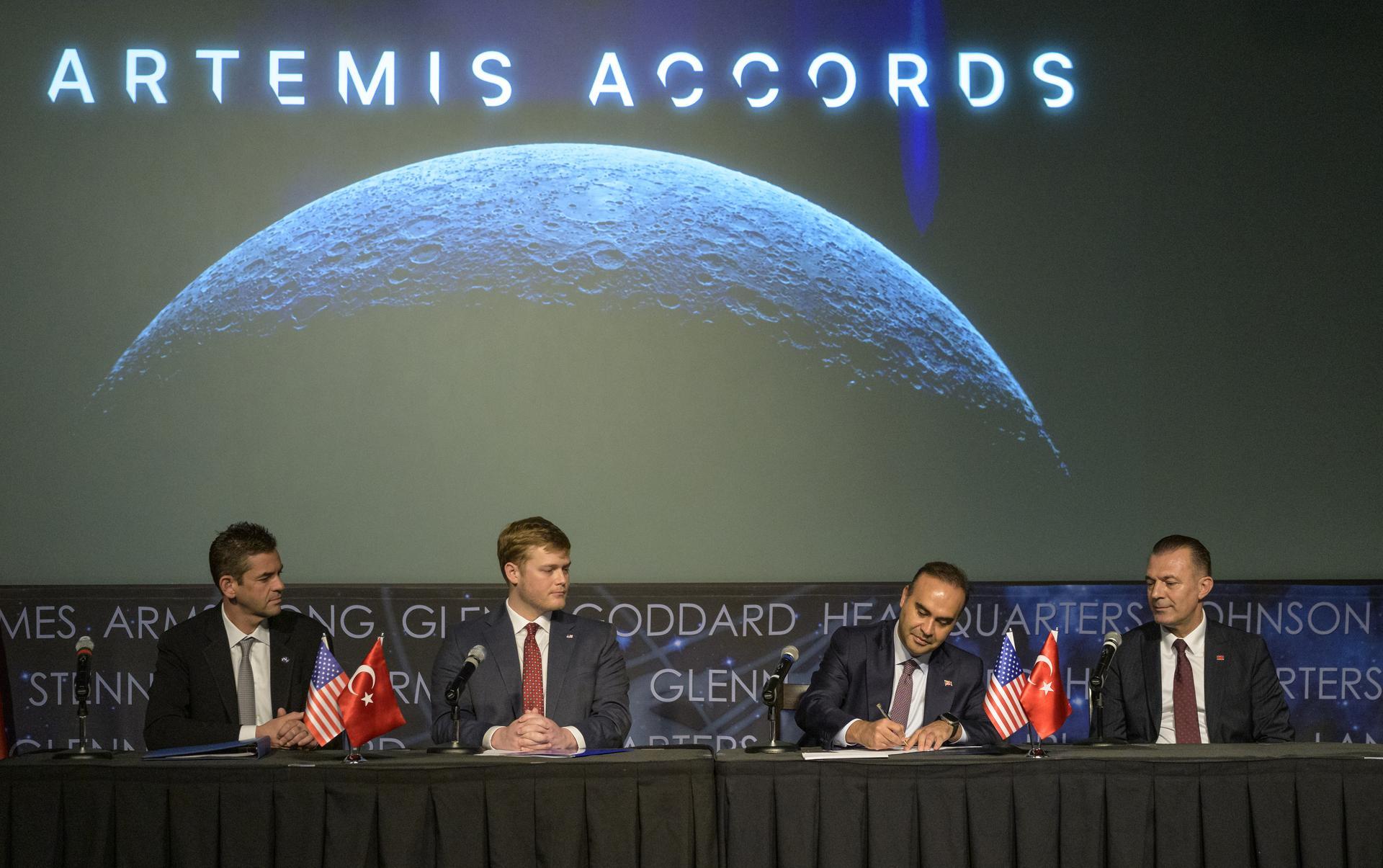
During a ceremony hosted by NASA Administrator Jared Isaacman at the agency's headquarters in Washington on Monday, the Republic of Türkiye signed the Artemis Accords, becoming the 71st signatory. Isaacman noted President Trump's directive to accelerate the return to the lunar surface and establish humanity's first enduring presence on another world, the Moon Base, laying the foundation for manned Mars exploration. He invited every signatory to contribute major pieces of hardware, scientific payloads, technology demonstrations, CubeSats, and other capabilities to future Artemis missions.
The agreement was signed on behalf of Türkiye by Minister of Industry and Technology Mehmet Fatih Kacır, with Turkish Space Agency President Yusuf Kıraç and U.S. Deputy Assistant Secretary of State for Space and Environment Connor Tomlinson participating. Türkiye's recent human spaceflight achievements underscore its commitment: in 2024, its first astronaut Alper Gezervaci traveled to the ISS on Axiom Mission 3, and a second, Tuva Atasever, flew on Virgin Galactic 07, conducting experiments and physiology research. Türkiye will soon launch its first lunar mission, AYAP-1, joining the growing group of countries launching their own satellites to the Moon.
Türkiye's signing comes as it prepares to host the International Astronautical Congress in Antalya in October, with dozens of Artemis Accords signatories expected to discuss the future of peaceful and transparent space exploration. The Accords were established in 2020 by NASA and the State Department with seven founding nations, introducing the first practical principles for safe and coordinated lunar and Mars activities: peaceful and transparent exploration, rendering aid, enabling access to scientific data, avoiding interference, and preserving historically significant sites and artifacts. By signing, Türkiye opens the door to opportunities for future lunar exploration with NASA.