NASA Challenge Tests Wheel Designs for Moon Base Mobility
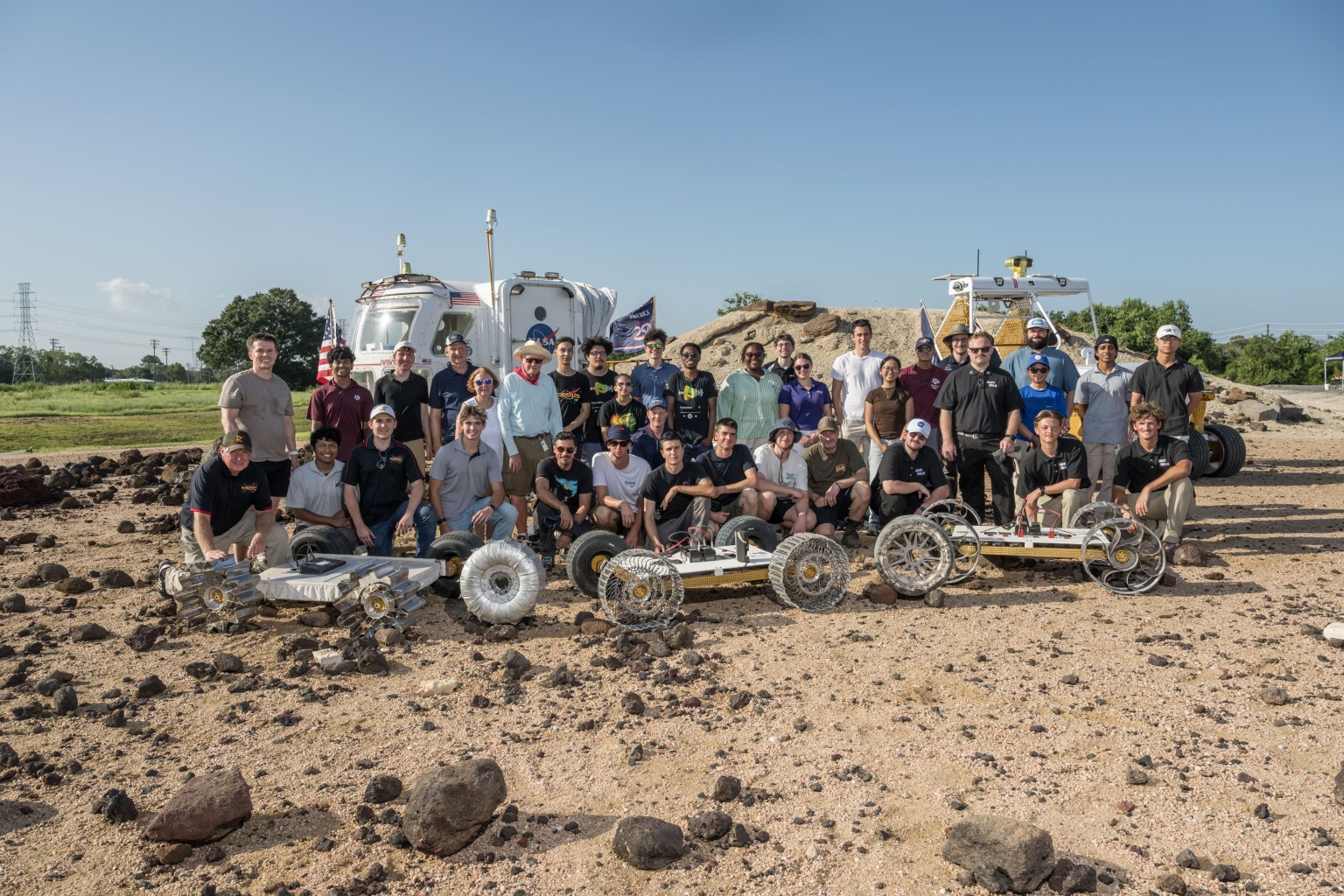
NASA is preparing to establish the Moon Base, and advancing surface mobility is considered key to letting crews and robotic systems travel farther across the lunar surface. The Rock and Roll with NASA Challenge therefore invited public innovators to design and build next-generation lunar rover wheels. Five teams from 128 submissions and 49 countries reached the final phase, testing prototypes on July 31 at NASA’s Johnson Space Center in Houston. The challenge asked for lightweight, durable, and scalable wheels that could support longer-duration lunar surface operations, stay compliant enough to absorb impacts, maintain traction at higher speeds, and withstand the harsh lunar environment.
During testing, the wheels were fitted to MicroChariot, a 45-kilogram test rover, and run through a series of courses at Johnson’s Rock Yard to evaluate performance across terrain types. NASA Johnson uses ground prototypes to test mobility technologies, while lunar terrain vehicles will be delivered to the lunar surface through the Commercial Lunar Payload Services initiative. "Every additional kilometer a rover can reliably travel will expand how far we can explore, what science we can achieve, and what infrastructure we can build," said Ed Herrera, robotics engineer at Johnson and co-leader of the challenge. "Crowdsourcing gives us an opportunity to look beyond traditional approaches for lunar wheel design. The more wheel technologies we can develop and understand, the more options we have to meet the needs of different vehicles, terrains, and missions on the Moon and Mars."
The five finalist designs were distinctly different. The HTR Variable Flex Lunar Wheel from Hellenic Technology of Robotics SA uses an internal system to vary stiffness depending on terrain and vehicle needs, adapting technology the team had spent about a decade developing for terrestrial wheels. The Hiper Wheel from Hyperbola uses tensioned cables and a corrugated structure to provide spring-like behavior, flexing without traditional radial spokes. The Huff Helo Flexible Titanium Wheel from Huff Helo Inc. uses formed titanium sheet metal as both structure and spring, though testing found its strength also made it more rigid, causing it to bounce over some obstacles instead of conforming to terrain. The Payne Aviation Wheel from Deborah and Craige Payne took inspiration from aviation and early automobile tire designs, using a pneumatic approach from an aircraft mechanic. The winning Scotch Pad Tyres concept came from Australian mechanical engineer Daniel Bloomfield and his son Isaac Bloomfield; their prototype uses a Nomex-based tire structure supported around an aluminum hub, and the soft material allows the wheel to flex and absorb impacts.
The results expand NASA’s options for lunar and Mars rovers, showing how crowdsourcing can surface novel wheel technologies beyond traditional approaches.