Curiosity Blog, Sols 5022-5028: Cashing in at Cache Creek
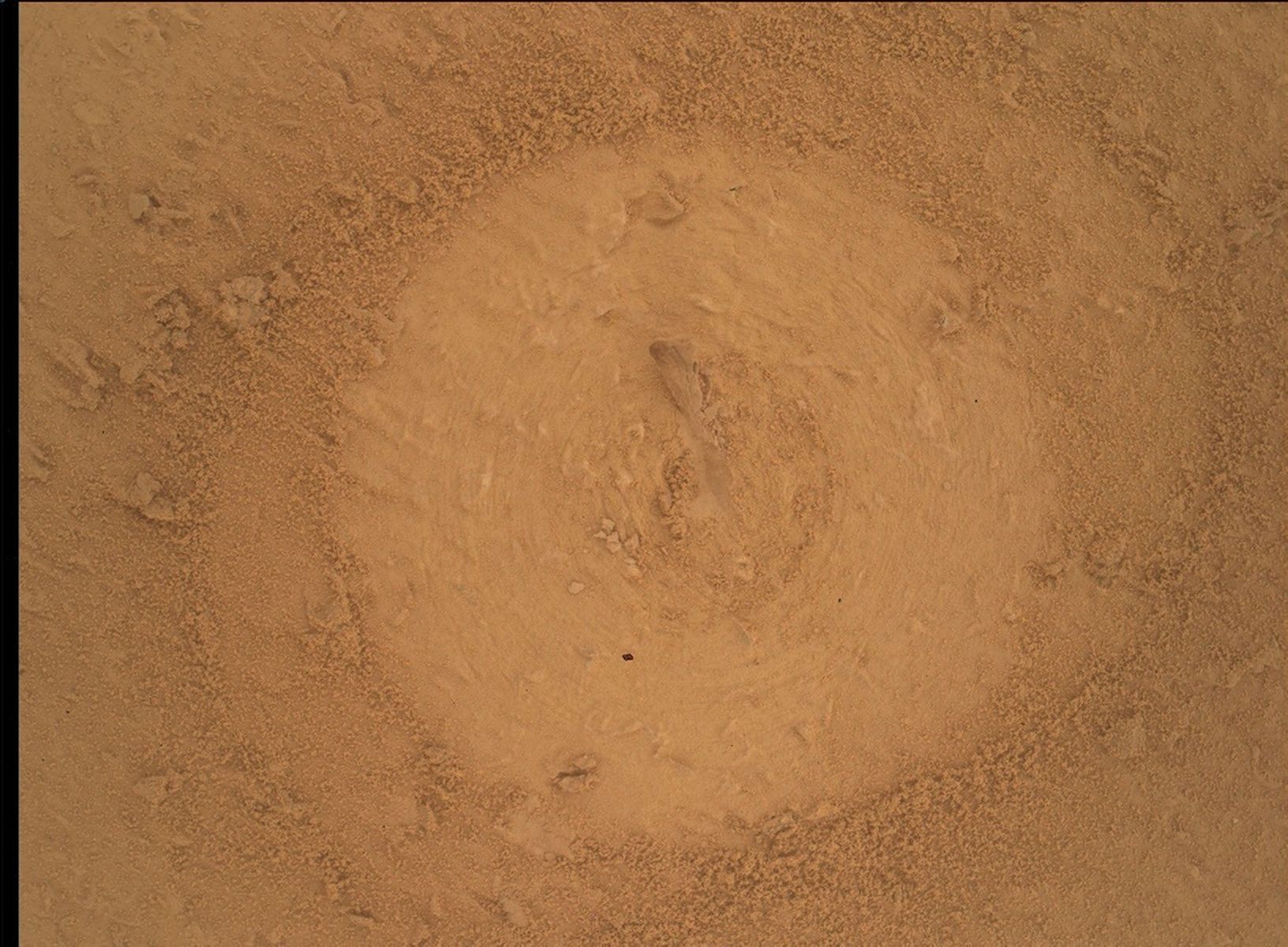
In a NASA Mars Science Laboratory mission update written by Lucy Thompson, a senior research scientist at the University of New Brunswick in Canada, with an Earth planning date of Friday, Sept. 25, 2026, the Curiosity team described entering a new quad in Gale crater called Cache Creek. The quad is named after a geologically diverse area of British Columbia, Canada, that includes exposures of oceanic crust, marine sediments, volcanic rocks, and glacial deposits, as well as lakes with unusual chemistry that may be analogous to lakes that once existed on Mars; it also lies at the southern end of the 1860s Gold Rush Trail. Before landing, the Gale crater exploration area had been divided into rectangular parcels named after small towns associated with significant geological features, and targets within those quads were given unofficial names based on each quad's theme. Curiosity has long since climbed above the pre-landing quads and, over her 14-year, 38-kilometer (24.6-mile) trek, has gained more than 1 kilometer (0.6 miles) of elevation. This week the team successfully drilled the 48th rock target in Gale crater, 'Basque Lakes,' from the Cache Creek quad.
As APXS uplink lead and strategic planner for the week, Thompson helped plan the triage contact science on the potential Basque Lakes drill target and communicate the results to the rest of the team. The team placed APXS in contact with the rock target to measure its chemistry and positioned the MAHLI camera within 1 centimeter (about 0.4 inches) to examine its textures in detail. ChemCam also fired its laser at the Basque Lakes drill target to further characterize its composition. After engineers checked the rock's stability with a pre-load test, MAHLI imaged the target again. Results from all these activities helped determine whether to proceed with drilling. Despite significant power constraints associated with drilling and the accompanying analyses, as well as an aging rover, the team was also able to plan additional activities: Mastcam imaged the surrounding terrain to provide context for the new drill sample, and ChemCam analyzed the chemistry of another nearby bedrock target, 'Peace River,' and used its imaging and passive spectroscopic capabilities for further observations.
The team may not literally strike gold, but it is eagerly awaiting the CheMin X-ray diffraction analysis of the drilled sample in that weekend's plan. That analysis will reveal what minerals the sample contains and what they can tell the team about the depositional and alteration history of this rock exposure—including whether similar minerals are present to those associated with some lakes in the Cache Creek area of British Columbia.