Curiosity Blog, Sols 5029-5035: Back in the Lab
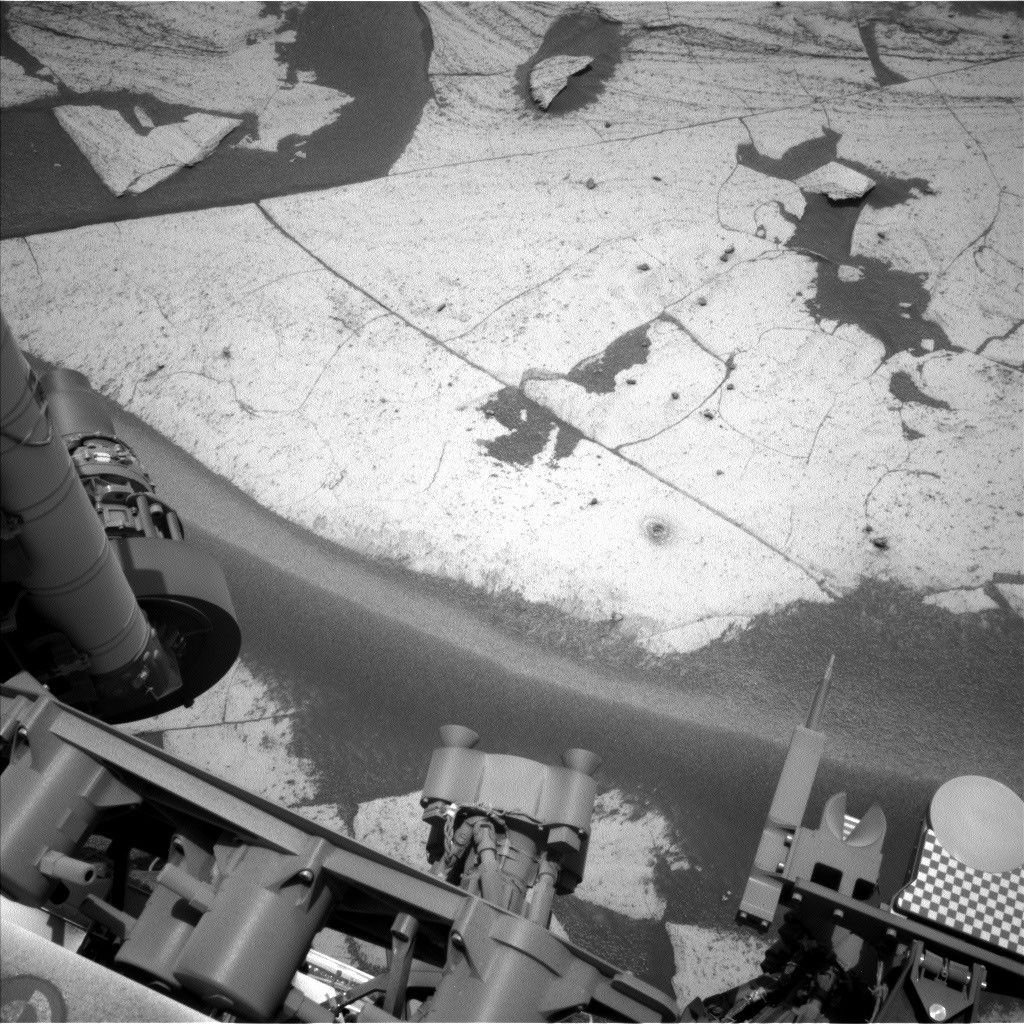
This Curiosity mission update covers Sols 5029-5035, written by Michelle Minitti, MAHLI deputy principal investigator, with an Earth planning date of Friday, Oct. 1, 2026. Most Curiosity plans involve Mastcam and ChemCam mosaics, ChemCam and APXS chemistry analyses, MAHLI and MARDI images, and systematic REMS, RAD, and DAN measurements. Only when the rover stops to drill does it fully live up to its Mars Science Laboratory designation, using CheMin and SAM to analyze Martian rock.
The week's focus was wrapping up CheMin analysis of a sample from the "Basque Lakes" drill hole, preparing SAM for its analysis, and analyzing the sample with the SAM tunable laser spectrometer (TLS). The CheMin data were key to SAM deciding to analyze the sample at all, and SAM will wait for the TLS results — a measurement of volatiles present — to decide whether to follow up with a separate mass spectrometry analysis next week. Because laboratory activities require a significant portion of the rover's daily power budget, the rest of the payload largely takes a back seat during drill campaigns, which the team considers a worthy trade for CheMin and SAM's valuable data. Using the power that was available, the team still gathered context data and continued systematic environmental monitoring.
Mastcam acquired a 360-degree mosaic of the surroundings to build a full picture of the geologic setting of the sample. Its color and improved resolution relative to Navcam also guided subsequent science requests, including more focused Mastcam imaging of structures near the workspace and ChemCam RMI imaging of the "Cordillera" butte. Mastcam, coupled with Navcam, planned seven photometry observations spread across fixed times of day to evaluate how the observed spectral characteristics of targets change as the Sun angle on them changes, helping interpret images from the rover and from cameras in orbit. ChemCam gathered more chemistry data from a variety of materials in the workspace, from the Basque Lakes drill hole interior to sand ripples ("French Creek") covering the bedrock and loose gray clasts of unknown origin ("Wooley" and "Fireside") sprinkled across the workspace.
Environmental monitoring included regular REMS, RAD, and DAN measurements, plus Navcam and Mastcam monitoring of dust loading in the atmosphere, cloud activity, and dust-devil activity.