Stops Along the Path of Totality
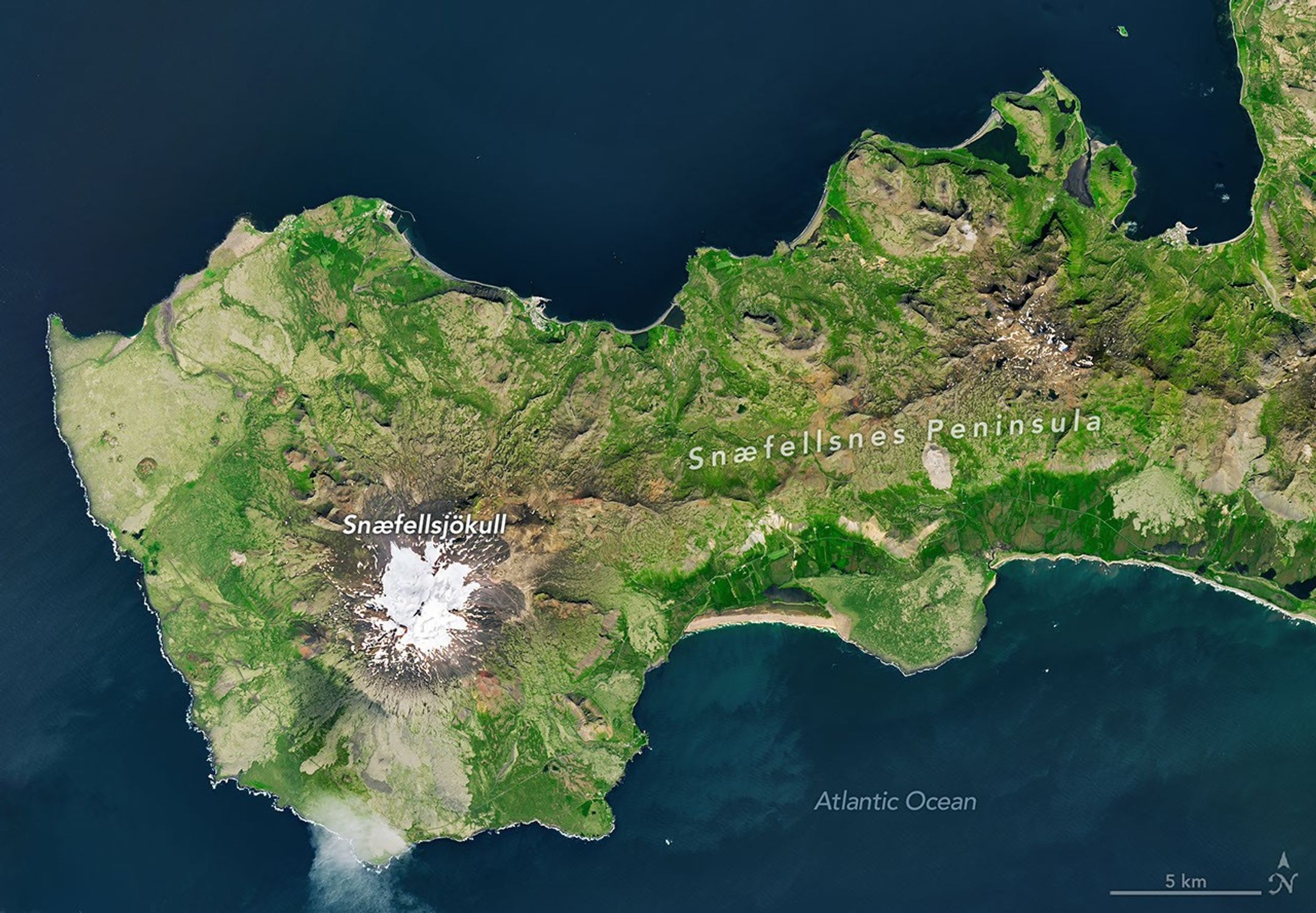
On August 12, 2026, the Moon and Sun will align to produce a total solar eclipse, the first since the April 8, 2024 eclipse that crossed North America. This time, the path of totality is much more restricted, covering only a handful of Northern Hemisphere land areas, including parts of Iceland and Spain. The Moon's shadow will first cross the Arctic Circle from northern Russia, then track along eastern Greenland, reaching western Iceland – including the Snæfellsnes peninsula – around 5:45 p.m. local time (17:45 UTC), where the greatest eclipse will occur with the Moon appearing largest.
The Snæfellsnes peninsula is home to the ice-covered Snæfellsjökull stratovolcano, which last erupted about 1,800 years ago and is the centerpiece of a national park. The area, designated a UNESCO biosphere reserve in 2025, contains over 70% of Iceland's flora and diverse volcanic landscapes, wetlands, and grasslands. Jules Verne's A Journey to the Center of the Earth famously used the volcano as an entry point to the underworld. After Iceland, the umbra crosses the North Atlantic and reaches northern Spain shortly before sunset, running east-southeast along the Ebro River, which flows through La Rioja's vineyards and ends at a delta on the Mediterranean coast between Barcelona and Valencia.
Satellite cloud-cover data from August suggests viewers in Spain have a better chance of clear skies than those in Iceland. Outside the path of totality, parts of Europe, Africa, Canada, and the northern and northeastern U.S. will see a partial eclipse.