1,000 Museum Visitors Dive Into NASA Sea Level Science on World Ocean Day
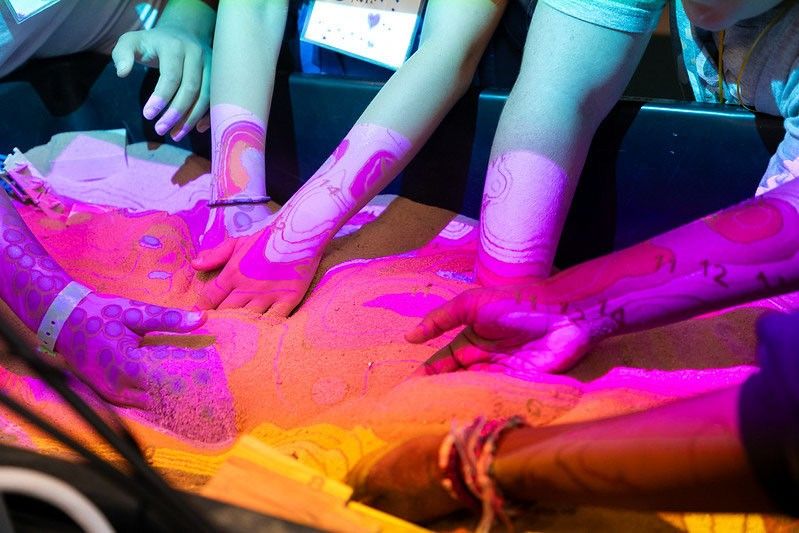
On June 6, 2026, more than 1,000 visitors explored NASA sea level science at the University of Georgia Aquarium on Skidaway Island during a free World Ocean Day event. The event was supported by NASA's Science Activation program through the Sea Level Education, Awareness, and Literacy (SEAL) project – a national effort that connects NASA sea level rise data with educators and coastal communities, particularly those historically underserved and already experiencing sea level impacts. SEAL is a partnership between NASA and four NOAA Sea Grant programs working to expand sea level rise understanding across U.S. coastal regions.
Hands-on activities, led by Marine Extension and Georgia Sea Grant and the Coastal Equity and Resiliency Hub at Georgia Tech, included a 'Tumbling Tower' game where removing blocks represents different community impacts from rising seas, and 'sea level friendship bracelets' using colored glass beads to represent observed sea level rise along local coastlines. The event also marked the debut of a new augmented reality sandbox: guests shaped coastal landscapes in sand and watched NASA-informed sea level rise projections transform their creations in real time. Participants could then test resilience strategies, such as adding dunes or relocating homes, to see how adaptations might help communities prepare for future change.
Educators at the event received four SEAL lesson plans designed for classrooms and informal settings, covering sea level rise processes, modeling, variation, and impacts through NASA data and interactive STEM activities. Shannon Matzke, Marine Educator and Public Program Coordinator at UGA Marine Extension and Georgia Sea Grant, said the free admission – enabled by NASA's support – allowed the event to reach more people and different audiences than usual. SEAL aims to make all its lesson plans available online; until then, digital copies can be requested from Matzke. The project is supported by NASA cooperative agreement NNH21ZDA001N-SCIACT.