Roman Commissioning
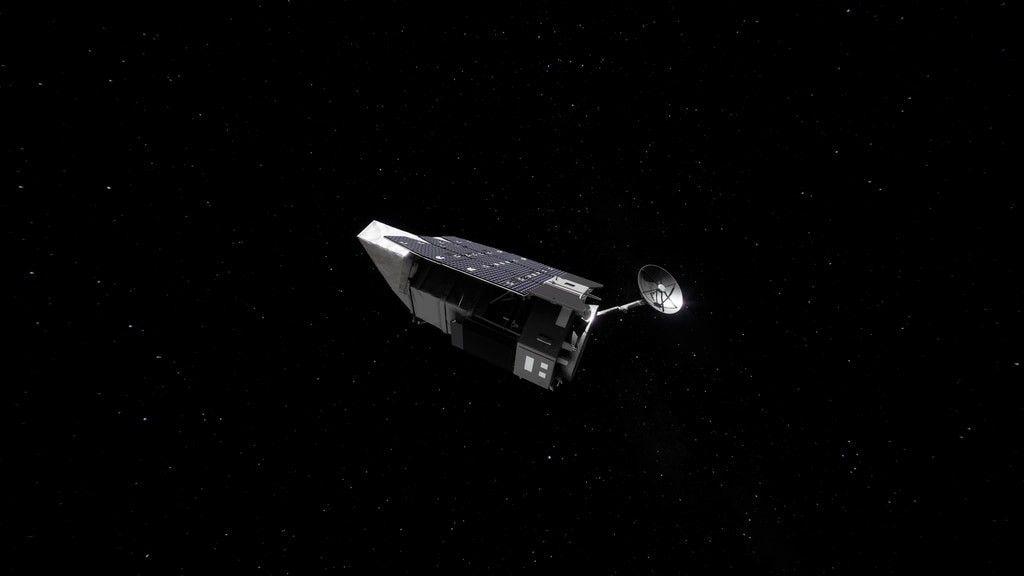
The Roman Space Telescope is on a three-month journey from Earth to Sun-Earth Lagrange Point 2 (L2), where it will undergo commissioning — the process of turning on, adjusting, calibrating, and preparing its systems for science operations. During this period, engineers and scientists verify that the observatory performs as expected, with the schedule subject to change as assessments and adjustments proceed.
One hour and 23 minutes after launch, Roman began emerging from its stowed rocket-fairing configuration. The solar panels and sunshade have already deployed, providing power to systems and shading the rest of the observatory. In the coming days, the high-gain antenna will swing out, and the visor-like deployable aperture cover will move into place, permanently revealing and shading the primary mirror.
At L2, Roman will settle into a stable halo orbit, where the combined gravity of the Sun and Earth, along with the object's motion around the Sun, keeps it aligned with Earth with minimal fuel use. This location offers exceptionally stable optical performance, a constant unobstructed view of a wide swath of sky (Earth will not block much of the view), and reduced heat from Earth, the Sun, and the Moon — an advantage for an infrared telescope that "sees" heat.