NASA Technique for Manipulating Satellite Photos Now Reveals Ancient Images
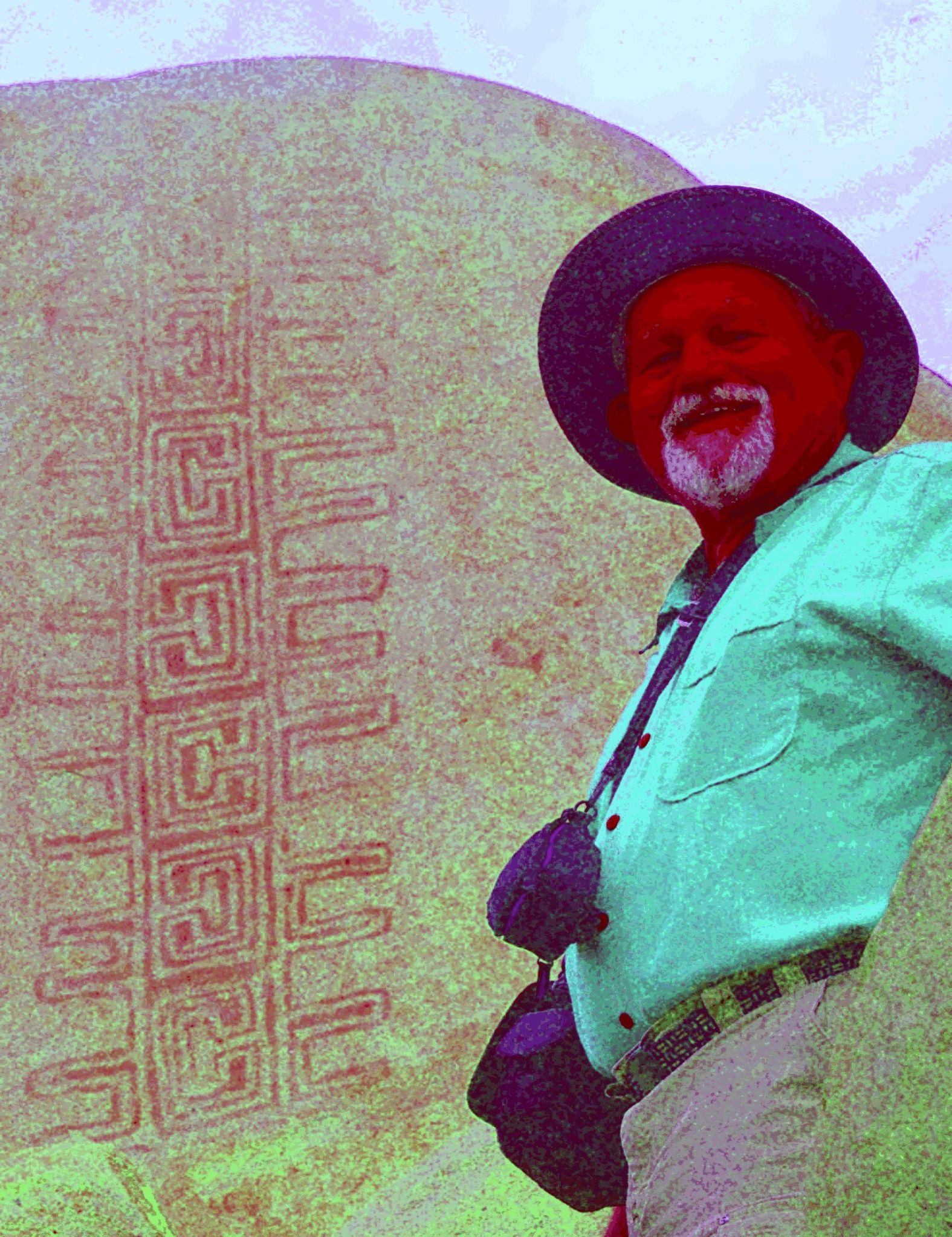
In Angkor Wat, Cambodia, faded paintings of horseback riders and a traditional musical ensemble, invisible to the thousands of daily visitors, were found between 2010 and 2012, along with about 200 other paintings throughout the complex, using a technique conceived at NASA's Jet Propulsion Laboratory. The technique, known as decorrelation stretch, heightens contrasts in digital imagery, making previously invisible features visible. Around 2005, rock art enthusiast Jon Harman, a retired medical imaging professional, saw NASA images of the Martian surface processed with and without the technique and realized it could reveal ancient faded images.
Harman found a 1996 NASA paper by JPL's Ronald Alley, who was developing applications for the ASTER instrument on NASA's Terra satellite; Alley's former supervisor had coinvented the technique. Harman then built a plug-in called Dstretch for ImageJ, an open-source program from the National Institutes of Health, and later created smartphone apps mimicking the technique. He now fulfills about 200 Dstretch requests per year, and the apps have been downloaded thousands of times.
Dstretch has been used to identify and clarify imagery at ancient sites in Norway, an Egyptian tomb, a Canadian park, and many others. It has also helped archaeologists find buried remains of ancient Greek buildings and examine tattoos on mummified remains, among other non-rock-art applications. Harman says he was not surprised by its popularity in rock art, but has been surprised by the variety of applications that emerged.