Suspected Second-generation Planet Solves NASA Hubble Cold Case
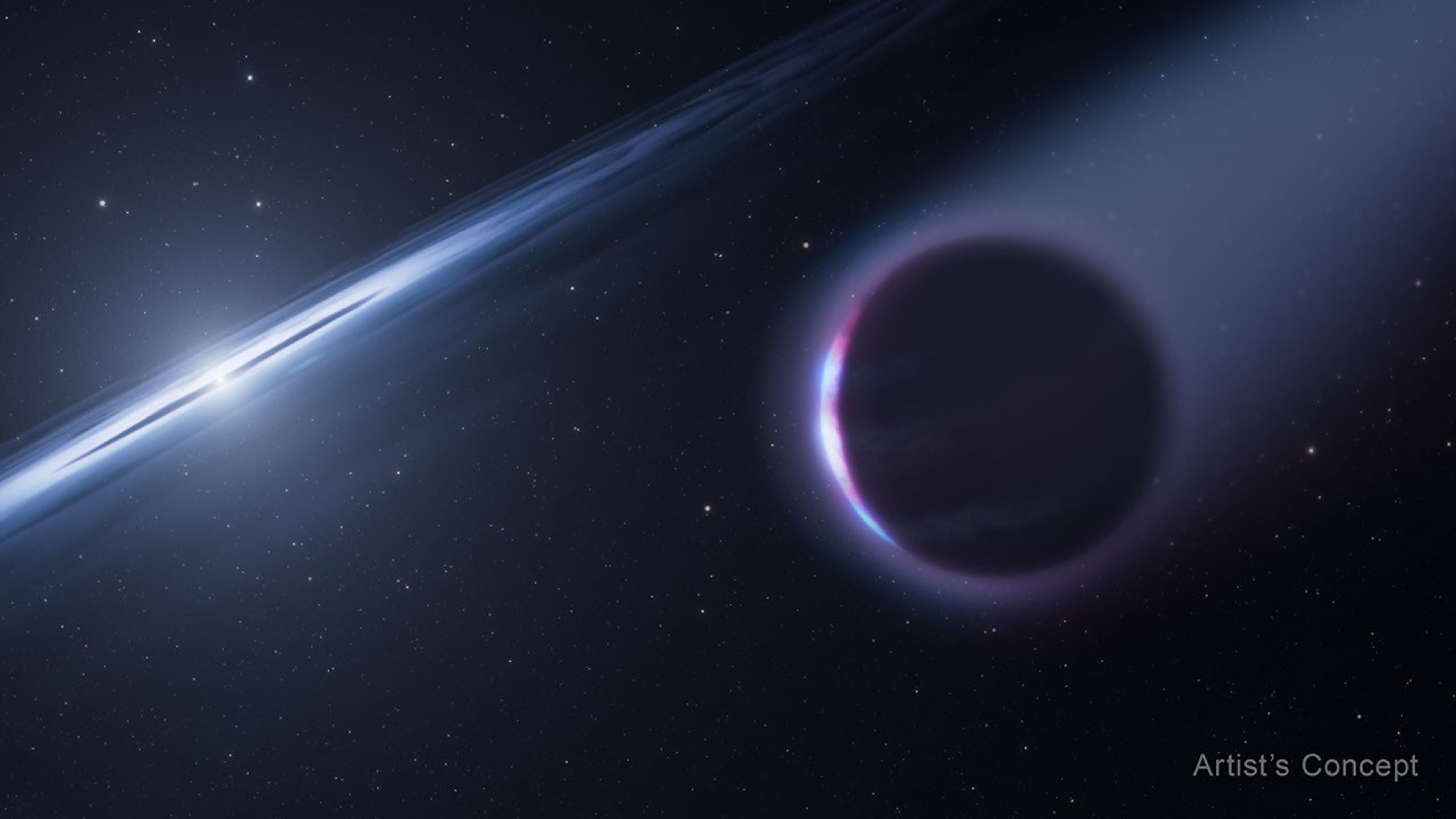
A study published Monday in Nature Astronomy reports that astronomers have reopened a cold case in Hubble’s archive and found a chemical clue indicating the white dwarf HS 0209+0832 may host a second-generation planet. A white dwarf is the remnant core of a low-mass star that has burned through its nuclear fuel and lost its outer envelope of gas and dust; a second-generation planet would form around that remnant from the cast-off material. Earth and the other solar system planets are first-generation planets, formed from material left over from a star’s birth. An artist’s concept depicts the sequence: a Sun-like star becomes a red giant, then a small, bright white dwarf surrounded by a disk of expelled outer layers, from which a second-generation planet forms. Lead author Jamie Williams, a doctoral candidate at the University of Warwick, said the finding suggests the white dwarf stage may not be an epilogue but a later chapter in a much longer story.
Williams found the clue by returning to Hubble’s 1999 observation of the star, which contained roughly 100 chemical features that could not be identified at the time. Using an updated chemical database, Williams matched many of those mystery features to niobium. Hubble showed a high abundance of niobium in this white dwarf system, a signature Williams said was unfamiliar when first found in the archival data.
Niobium is found in our solar system and has terrestrial uses including jewelry and medical imaging devices, but the amount seen in HS 0209+0832 points to a planet forming not from a star’s birth material but from material ejected as the star died. Team member Nicholas Stone, a theoretical astrophysicist at the University of Wisconsin–Madison, explained that niobium and other elements heavier than iron are astronomically special because they are not formed in stellar cores by thermonuclear fusion; they can only be synthesized in exotic conditions that briefly emerge inside dying stars. The presence of niobium is therefore a signpost of those death throes and of the dying star’s innards being expelled into space.
The team theorizes that after the star ejected this chemically enriched material, some of it coalesced into a gas giant planet. The rest of the ejecta dispersed long ago, but the planet remains. The result points to the possibility that systems like ours are only a first chapter, with new planets potentially forming around stellar remnants.