Nancy Grace Roman Space Telescope Launches this Sunday
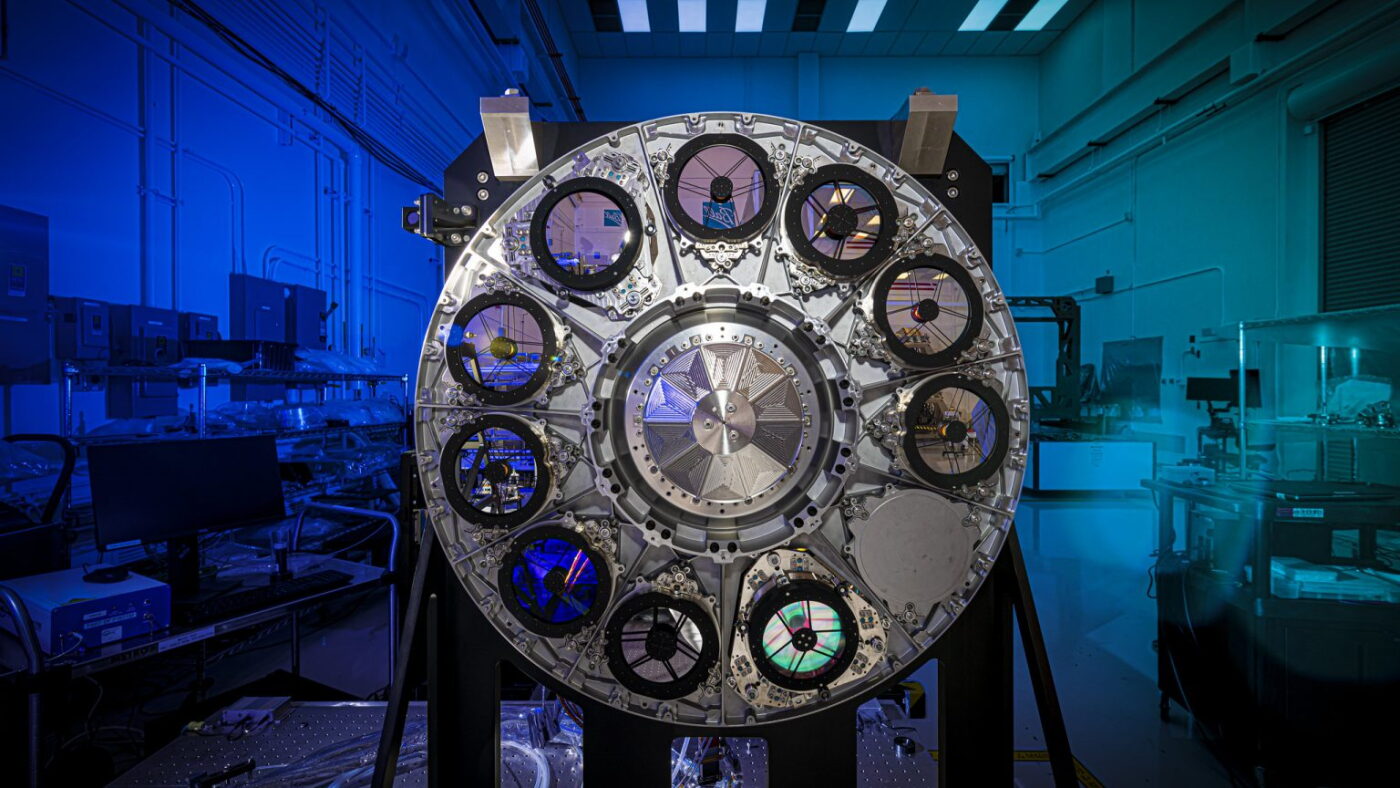
The Nancy Grace Roman Space Telescope, named after NASA's first chief astronomer, is scheduled to launch on Aug. 30. The $4.3 billion observatory is expected to reveal new information about the expansion of the universe and discover multitudes of planets orbiting distant stars.
Roman has an unusual origin. About 15 years ago, NASA planned a telescope to search for Type 1A supernovas, the cosmic distance markers used to uncover dark energy (a discovery that won the 2011 Nobel Prize). While developing those plans, the National Reconnaissance Office contacted NASA offering an unused surveillance satellite; NASA accepted and substantially modified it to become the next major space observatory.
Cosmologist Daniel Scolnic of Duke University says finding more supernovas is key to understanding cosmic expansion, and Roman could fundamentally change the standard cosmological model. 'In the last few years, there have been measurements saying that model might be wrong — and that's something that Roman will absolutely nail,' he says.
The telescope also will spend a month surveying all the stars in the Milky Way. Project scientist Julie McEnery notes that while Roman has similar sensitivity and sharpness to Hubble, its wide-field design makes it far faster: 'That one month of observations to survey our Milky Way galaxy would take about a century with Hubble.' Roman will produce broad catalogs of the sky, and these will be public immediately — 'a teacher in a high school in Kentucky' will access the data at the same time as a Princeton professor.
For exoplanet science, Ohio State's Scott Gaudi and colleagues developed a detection technique using gravitational microlensing, which Roman is expected to exploit to find planets around distant stars.