NASA asked several former SR-71A staffers to help secret restart
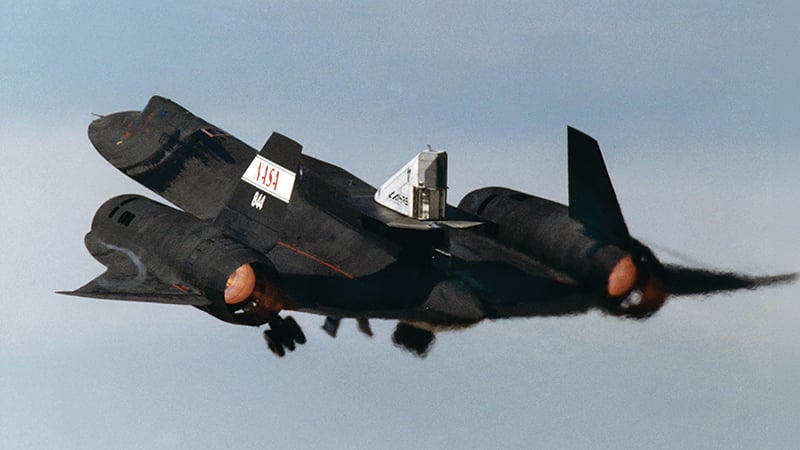
Mike Relja, a retiree in his late 70s and a former U.S. Air Force and NASA test engineer for the SR-71A, received an unexpected job offer from NASA about a month ago. David Ash, a former U.S. Navy and Joby test pilot hired in June as a special projects director for NASA, asked Relja to lend his expertise to a secret effort to return a long-retired and neglected Lockheed SR-71A Blackbird to flight after a nearly 27-year hiatus. Relja was skeptical, telling Aviation Week he is too old and that he doubted NASA could get there from here, though the report says it appears NASA is going to try. Two former test engineers confirmed jobs were offered.
According to commercial satellite imagery acquired by Aviation Week, agency employees removed SR-71A Tail No. 844 from a display pole near Lilly and Walker Avenues at the Armstrong Flight Research Center on Edwards AFB, California, early this year, certainly before May 17 and perhaps before April. The aircraft had stood there since about Oct. 9, 1999, the day of the final flight of No. 844 and of any Blackbird. NASA employees rolled it into the hangar that once housed the Space Shuttle at Edwards, and an inspection followed, Relja says.
By the time Ash extended the job offer to Relja in August, NASA already had crews working on the SR-71A inside the hangar, though Relja said that without equipment it was beyond him what they were doing. The first public hint of a return to flight came at the All-In Summit in Los Angeles on Sept. 12-14, when NASA Administrator Jared Isaacman teased an image of a new X-plane that showed the SR-71A's inward-canted vertical tails, bulbous midwing engine nacelles and flush, blended cockpit. The image prompted speculation that NASA is planning a modern X-plane based at least loosely on the Blackbird's distinctive profile, and Isaacman has sought new X-planes for aeronautic breakthroughs.
Aviation Week confirmed that NASA approached Relja, Tim Conners, another former NASA SR-71A test engineer, and others over the summer with job offers to work on the return-to-flight project for Tail No. 844. In meetings with prospective rehires, Ash brushed aside all questions about why NASA wanted to go to the effort and expense of putting the Mach 3-capable SR-71A back in flight. During his All-in Summit remarks, Isaacman began to provide some context, though the excerpt cuts off before detailing it.