NASA to Study Human Health, Performance During Crew-13 Mission
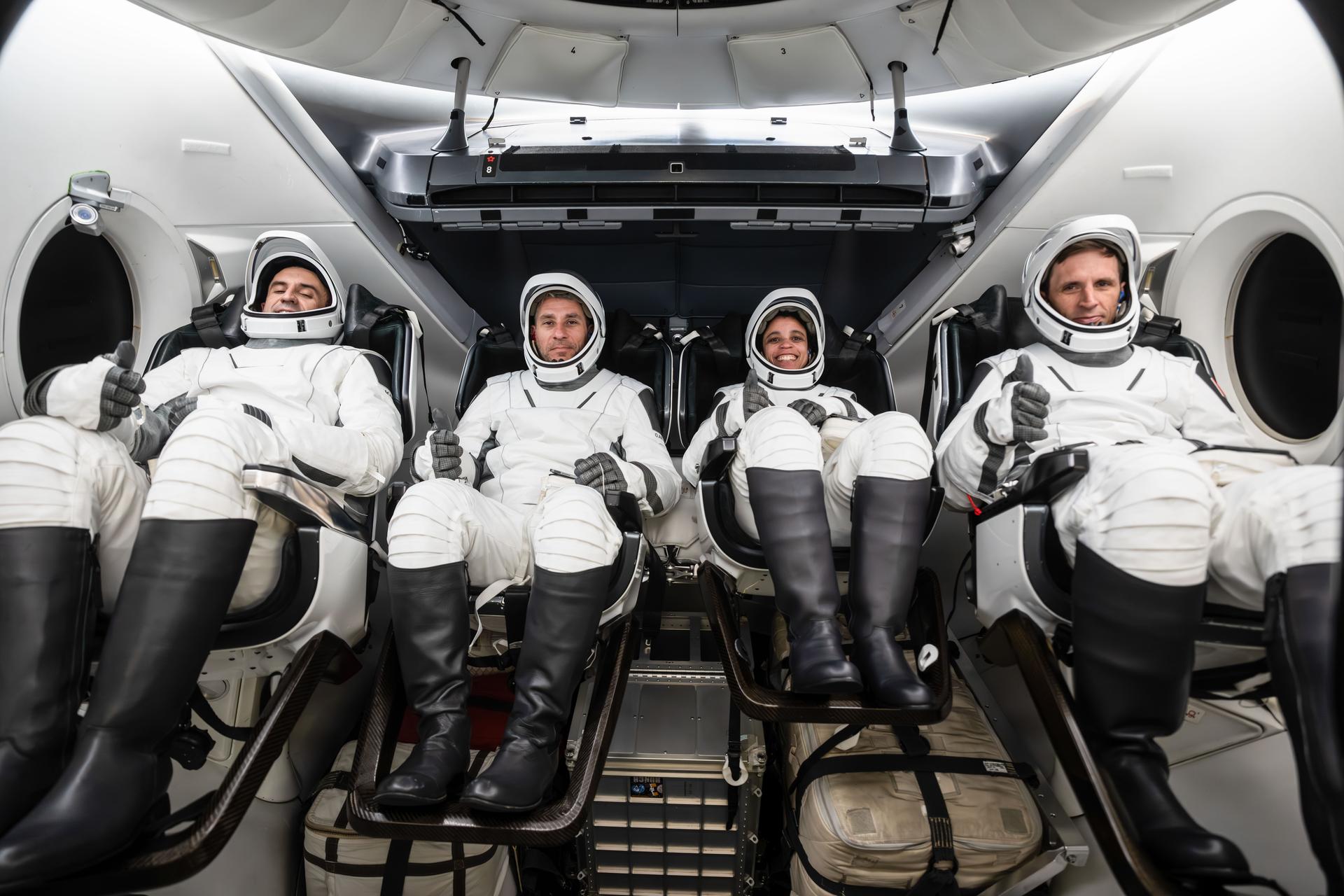
During NASA's SpaceX Crew-13 mission aboard the International Space Station, astronauts will support a series of biomedical and human performance investigations. These include a new collaborative effort to study how spaceflight affects blood flow and clotting, tests of crew members' manual piloting skills, evaluations of methods to counter vision and brain changes, collection of health data to inform future missions, and measurements of the forces astronauts experience during return to Earth to help refine re-entry hardware and procedures.
Among the upcoming research is Venous Haemostasis, a new collaboration with ESA (European Space Agency) that builds on previous studies of blood flow in space by combining the two agencies' efforts. By coordinating blood collections and other physiological data, researchers can reduce how often astronauts need blood drawn while combining analytical measurements to better understand how microgravity affects blood clotting and circulation. "In space, weightlessness can disrupt normal blood flow in astronauts' veins," said Jason Lytle, one of the study's principal investigators and a cardiovascular researcher at NASA's Johnson Space Center in Houston. "Irregular and slow blood flow can increase the risk of blood clot formation, a serious health condition. Venous Haemostasis will help us understand why these changes may occur in some astronauts but not others." Before, during, and after flight, astronauts will undergo MRI scans, jugular vein ultrasounds, blood pressure checks, and blood draws so researchers can track changes in blood flow and blood composition. Results will inform preventative measures for at-risk crew members and improve health and safety on future missions, and researchers hope knowledge gained may lead to better ways to prevent and treat blood clots both in space and on Earth.
A performance study called Manual Piloting uses lunar-landing simulations to test how well astronauts can handle challenging landings after extended time in microgravity. Because long-duration spaceflight can affect sensory systems, orientation, and motion control during shifts between gravity environments, researchers are evaluating how those changes influence piloting performance and whether refresher training shortly before landing can strengthen capabilities and decision-making.
Researchers will also continue the B-Complex study, which investigates whether a daily B-vitamin supplement can reduce or prevent Spaceflight-Associated Neuro-ocular Syndrome (SANS), a condition that can change astronauts' eye structure during long-duration missions. Past research suggests taking B vitamins daily during spaceflight may help protect astronauts from SANS. Participating crew members will undergo vision tests and take B vitamins before, during, and after flight to evaluate the supplement's effectiveness, and the study will also assess whether the B vitamins influence how c[rew members fare — excerpt truncated].