Lala Batters Hawaii
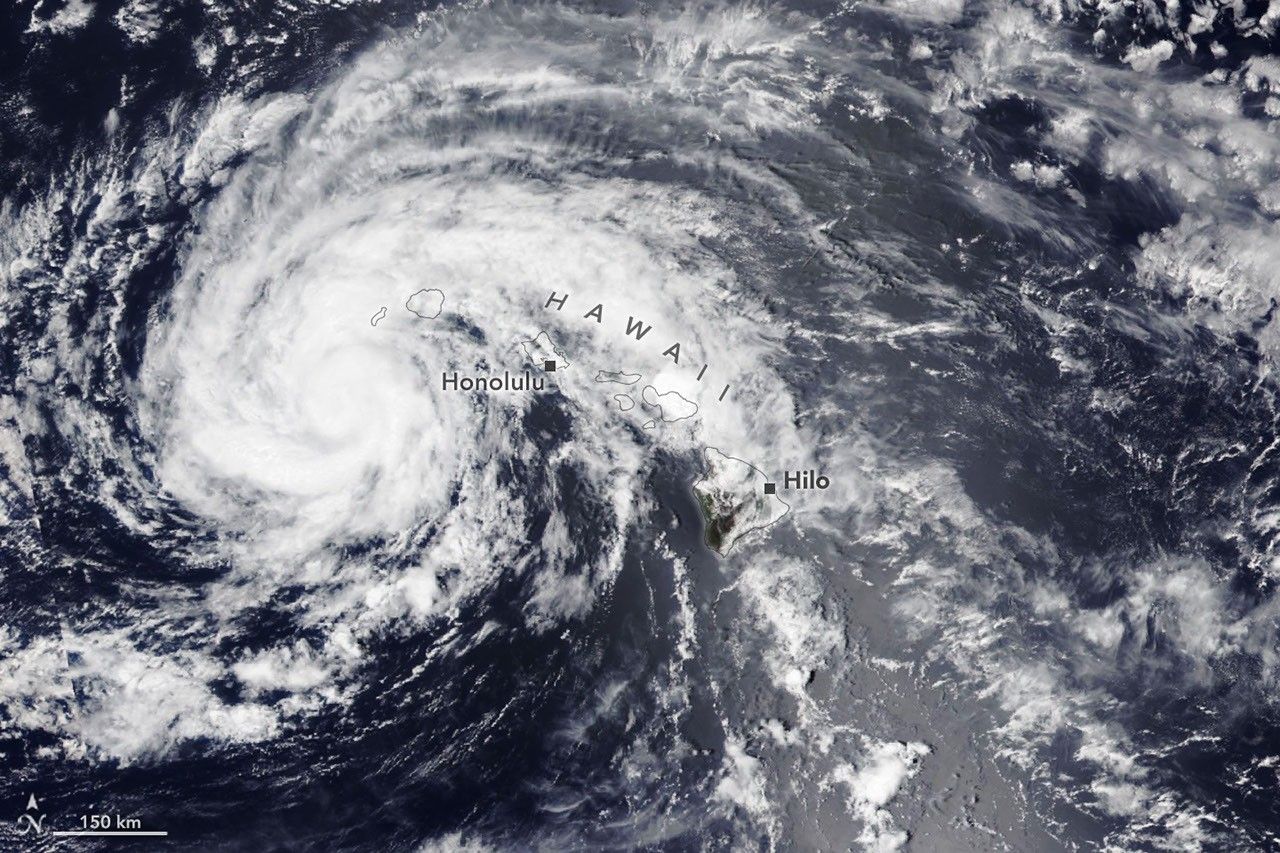
Hurricane Lala narrowly avoided a direct landfall on the Island of Hawaiʻi in mid-August 2026, passing just south of the island on August 15 as a Category 1 storm on the Saffir-Simpson wind scale. Despite the close call, the storm delivered serious damage: rainfall totals exceeded 20 inches (50 centimeters) in parts of the island, with the highest total of 43.55 inches (110.6 centimeters) recorded at Laupāhoehoe, on the coast northwest of Hilo, as of the morning of August 17. The storm downed trees, damaged bridges, and knocked homes off their foundations. Coastal areas were pummeled by large waves, and the summit of Mauna Kea (over 13,000 feet / 4,000 meters elevation) experienced blizzard conditions.
By early afternoon on August 16, Lala had tracked northwest roughly parallel to the island chain and was southwest of Kauaʻi, having weakened to a tropical storm with sustained winds of 65 miles (105 kilometers) per hour, according to the National Hurricane Center. While the Island of Hawaiʻi took the brunt, other islands also saw destructive effects. Strong winds caused widespread power outages, with more than 220,000 customers statewide without power as of the afternoon of August 16, according to news reports. Wind and rain damaged infrastructure, and floodwaters and debris rendered roads impassable.
The active tropical cyclone season in the Eastern Pacific in 2026 is consistent with an ongoing El Niño, which has been underway since mid-June. Warm water in the equatorial Pacific—the hallmark of El Niño—and the moisture and energy it transfers to the atmosphere help fuel nascent tropical storms. Lack of wind shear, another typical El Niño pattern in the region, also encourages tropical storm development and strengthening. In contrast, the Atlantic hurricane season has been relatively calm because greater wind shear over the Atlantic Ocean and Caribbean Sea during El Niño inhibits hurricane formation by dissipating the upward motion of heat.