Curiosity Blog, Sols 4988-4994: More New Tricks for an Old Dog
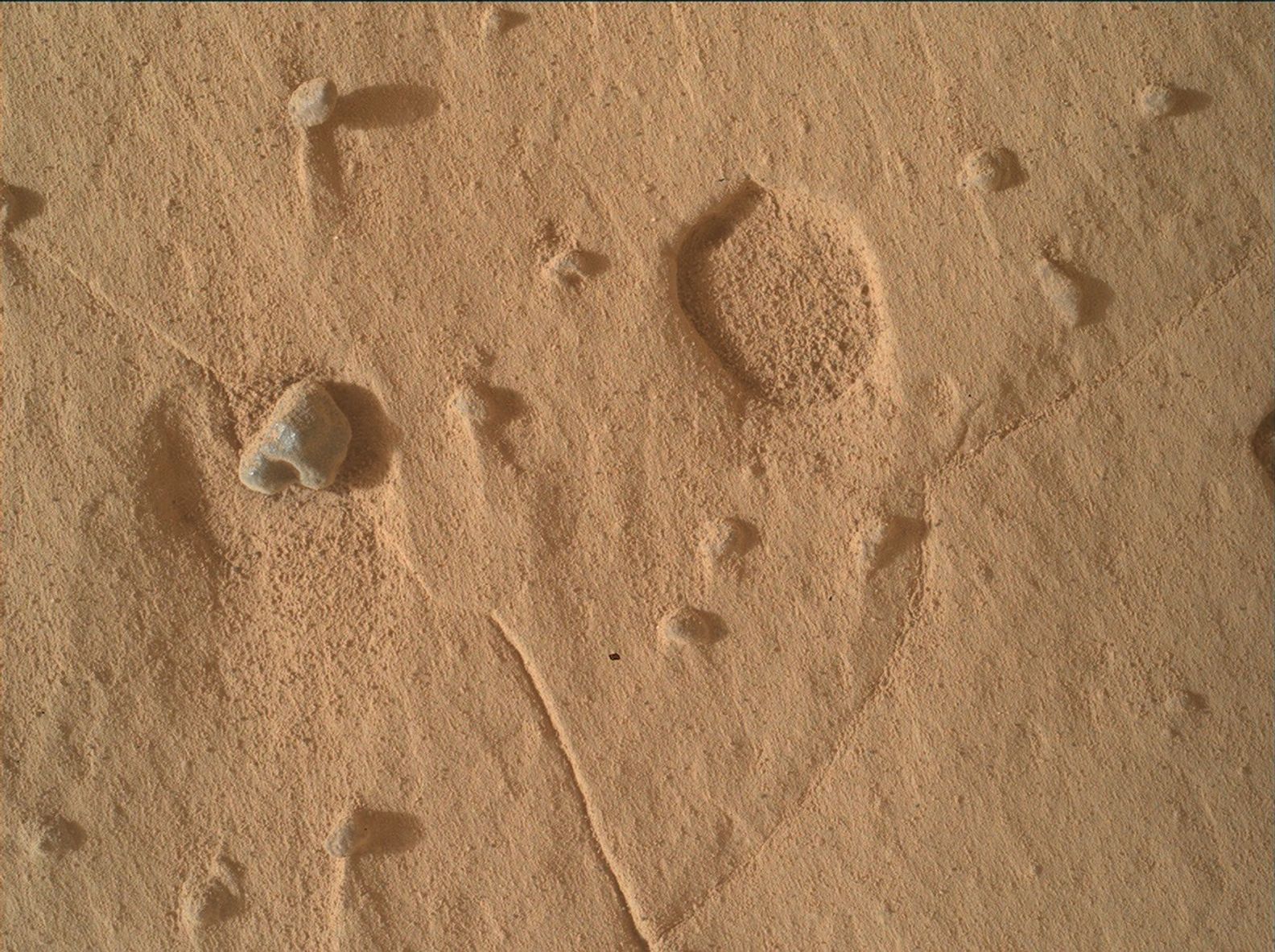
During the week of Earth planning date Aug. 21, 2026, Curiosity’s two workspaces presented features unlike anything seen before in 14 years on Mars: broad, shallow pits dotted across the bedrock. Unlike typical pits, which form when resistant nodules or pebbles weather out and leave voids, these were much broader and shallower and had no obvious leftover objects. MAHLI and Mastcam acquired stereo mosaics and tightly overlapping image sets to create digital elevation models of the pits, adding a new puzzle about the processes affecting this section of Mount Sharp's stratigraphy.
The 'typical' bedrock was anything but boring: Mastcam imaged and ChemCam rastered complex packages of layers showing changes in texture and structure over short vertical distances, possibly recording rapid changes in depositional conditions. ChemCam, MAHLI, and APXS analyzed gray, rough, resistant layers of different chemistry from the host rock, while ChemCam examined gray float rocks and small loose pebbles to understand their origins. Farther afield, the 'Cordillera' butte received a comprehensive Mastcam mosaic and focused ChemCam RMI mosaics, and the Tolhuaca and Potosí buttes down Valle Grande were targeted for crossbedding searches and mineralogy assessment of the dark caprock on Potosí.
The environmental science team planned REMS, Mastcam, and Navcam activities at a higher-than-usual cadence to monitor a potential regional dust storm, which appeared to be dissipating by the end of the week. All this was accomplished despite losing one planning day due to a lost downlink.